Attendance, absence, lateness and leave
Why Attendance Matters | He Kura Tangata
Every day at school matters. Regular attendance helps students:
- Succeed academically
- Stay connected to their peers and teachers
- Build positive habits for life beyond school
When students are absent regularly or arrive late, it disrupts their learning and the learning of others.
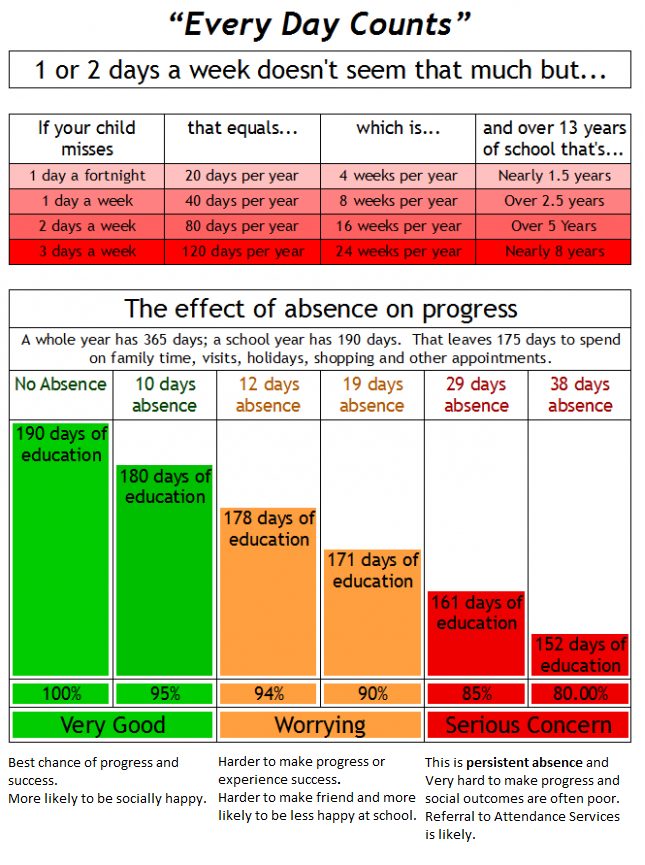
Regular attendance is defined as over 90% – meaning fewer that 5 days absence over a term.
Legal Requirements and School Responsibilities | Ngā Herenga ā-Ture me ngā Kawenga o te Kura
Thames High School | Te Kura Tuarua o Te Kauaeranga follows the law (Education and Training Act 2020 and the Education (School Attendance) Regulations 1951) and Ministry of Education Guidelines for student attendance.
This means school is legally required to:
- Take all reasonable steps to ensure students attend school
- Monitor attendance every period
- Follow up on unexplained absences or lateness
- Set targets for attendance levels
More details about our legal requirements are further below.
What We Expect | Ētahi Tūmanako
From Students | Ngā Ākonga:
- Be at school every day, on time and ready to learn
- Attend all timetabled classes, including Rōpū / Whānau
- Stay on school grounds during the day unless approved to leave
- Follow sign-in/out procedures at the Student Support Office
From Parents/Caregivers | Ngā Mātua, Kaitiaki:
- Make sure your child attends school unless they are sick or there’s another justified reason (e.g. bereavement)
- Notify the school as early as possible about any absence or lateness
- Schedule appointments and holidays outside of term time wherever possible
- Work with us if attendance becomes a concern
Parents/caregivers can refer to the Ministry of Education website for more advice about attendance.
- Includes the legal responsibilities of parents and guardians and the supports available.
Reporting an Absence | Te Rīpoata i tētahi Ākonga e Toitū Kore ana
Please report absences by 9.00 am:
- Phone the school on 07 868 8688. You can leave a message with the office.
- Email attend@thameshigh.school.nz
- Send a note to your student’s Rōpū/Whānau Kaitiaki (Teacher) prior to the absence (if the absence is anticipated).
Let us know your child’s full name, year level, and reason for absence. Without a reason, absences are marked as ‘unjustified.’
Absence for illness or other unexpected causes must be explained by the parent or caregiver either by note, text or by phone call.
Any absences known in advance must be approved by a Deputy Principal, using the official leave request form, available from the Student Support Office.
Application for leave for planned absences must be received one week prior to the start date, unless under urgent circumstances (e.g. bereavement). The purposes of the form are to notify teachers of planned absence and to allow parents and students to consider the implications on assessments or preparation for assessments that could be affected by the leave request.
If Young People | Taiohi Are Late | Mēnā e Tōmuri ana te Taiohi
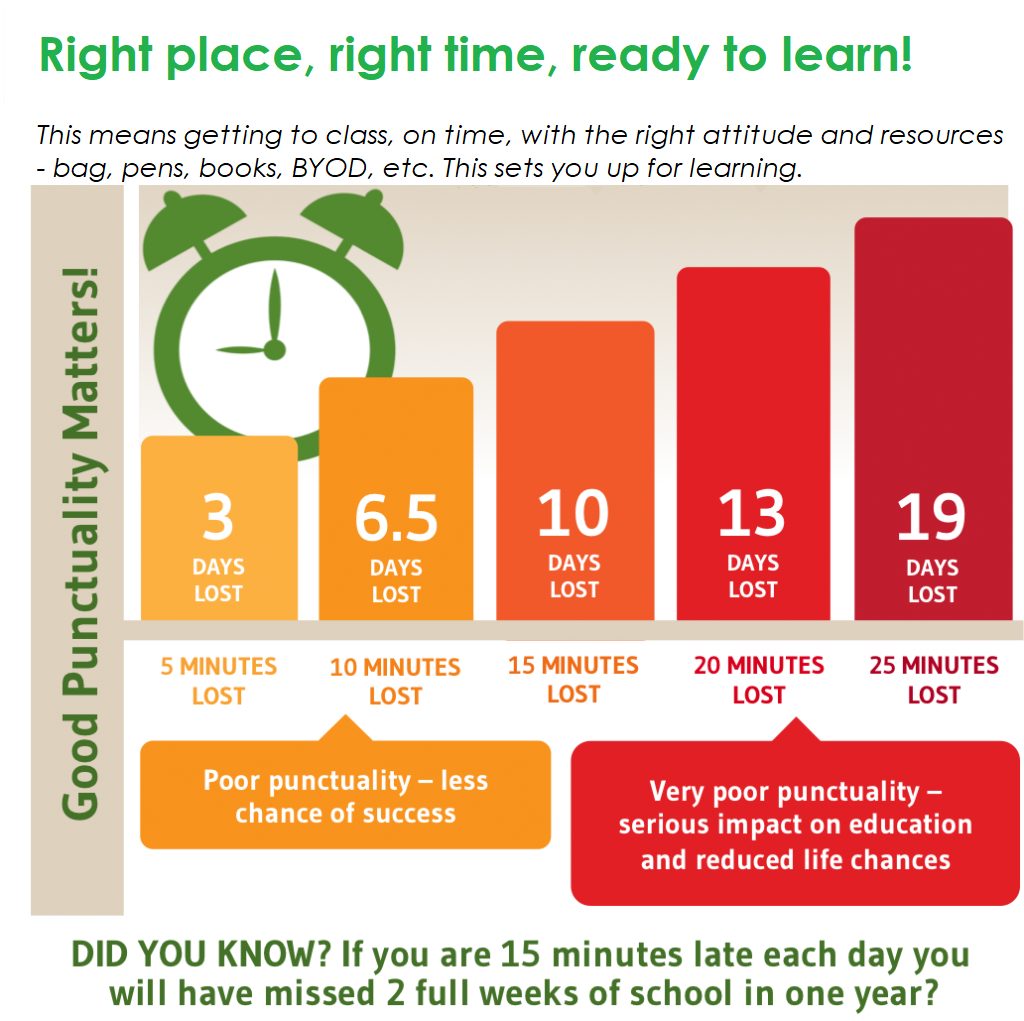
Being on time means getting the most from lessons and will typically mean a student is ready to learn. This means aiming to arrive 10-15 minutes before the scheduled start of the day and being ready to learn with all the right materials. A student who is late to class may not be ready to learn, will miss instructions, and may disrupt the class on entry. Every minute counts.
- All students | tauira who arrive after 8.45am must sign in at the Student Support Office
- An explanation is required – ideally from a parent/caregiver
- Medical or dental appointments should be supported by an appointment slip
- Repeated or unexplained lateness will be followed up by staff
- Students who are very late to class may be recorded as absent. For instance, if the student arrives with only 15-20 minutes of the class left then it is more accurate to record the student as absent.
- Being late by 5 minutes once a day adds up to 16 hours (or 3 days) of lost instructional time.
- If a student is absent 5 minutes once a week that is equivalent to missing 3 hours of instruction.
- Students arriving late to school because of tardiness or before-school appointments must sign in at the Student Support Office. Students will receive a date-stamped Late Pass to show classroom teachers. The office will record the lateness and record the time and note if the reason is justified (for example a dental/medical appointment or unjustified (for example, transport problems). If the lateness is due to an early morning dental/medical appointment, then please present the appointment slip to Student Support Office when signing in to justify the lateness.
- The School is aware that occasionally other circumstances cause a lateness outside of the control of the student or parent/guardian. This is expected to be a rare event, but in such circumstances, please provide a suitable explanation to the office (i.e. written note/email). This will be recorded by the office.
Staying at School During the Day | Me Noho ki te Kura i te Rā
Students | tauira must stay on school grounds unless they have approval, including interval and lunchtime. This is essential to ensure the safety and wellbeing of all students while under the school’s care. Failure to comply with this requirement will result in being considered out of bounds and/or truant from School.
Leaving School During the Day | Te Wehe Atu i te Kura i te Rā
- Visit the Student Support Office to get an Exit Pass. Exit passes must be organised, before school, or at a break. An exit pass needs to be shown to teachers to exit class.
- Sign out (and back in, if returning) using the tablet at the Student Support Office. Keep the pass to show when asked.
- In the case of sickness, dental or medical appointments, provided prior approval has been obtained from Student Support Office, the Guidance Counsellor and/or the School Nurse
- Provide a note or email to request permission to attend a legitimate appointment
- For any other reason with the prior approval of a Kaiāwhina or Deputy Principal who will issue an Exit Pass (student must still sign out/in)
- Year 13 students who have off-site study approval. Study is marked on a student’s timetable.
- Year 13 students may have permission to leave for lunch or study – this is a privilege and can be removed if misused.
How We Monitor Attendance | Te Aroturuki i te Taeā-Kura
- Attendance is recorded every period in KAMAR
- Parents/caregivers can access attendance via the KAMAR Parent Portal
- Text and email alerts are sent if a student is absent without explanation
- Weekly summaries are shared through our P.A.R.O.T. system
- Attendance is reviewed regularly by staff and leadership
What Happens If Attendance Becomes a Concern? | Mēnā Ka Raru te Taeā-Kura
We use a four-step system to support regular attendance, and identify and respond to attendance issues:
| Step | Step Name | Attendance % (Days Absent per Term) |
|---|---|---|
| Step 1 | Early Monitoring & Prevention |
|
| Step 2 | Early Intervention |
|
| Step 3 | Concern Stage |
|
| Step 4 | Critical Intervention |
|
Early Monitoring & Prevention | Aroturuki Tuatahi me te Ārai
- Build strong habits, communicate expectations, and celebrate success.
- Teachers and whānau kaitiaki check patterns of absence and lateness
- Families are reminded of expectations and offered early support
Early Intervention | Tautoko Tuatahi
- Identify barriers, increase support, and encourage improvement.
- Trigger: 5–9 unjustified absences in a term
- We contact home and develop a simple plan to support attendance
Concern Stage | Te Wa Arotake
- Individualised plans, formal meetings, and agency referrals.
- Trigger: 10+ unjustified absences or continued issues
- Formal whānau hui held
- Referral to Attendance Services or external support if needed
- Transition or re-engagement plans may be developed
Critical Intervention | Tautoko Matua
- Ministry escalation, home visits, education alternatives, and possible unenrolment.
- Referral to Ministry of Education – potential prosecution pathway
- Transition or re-engagement plans may be developed
Extra-Curricular Activities | Ngohe Taapiri
To participate in trips, sports, or events, students are required to attend school regularly, demonstrate our values, and have a great learning attitude.
- Maintain over 80% attendance (over 90% is preferred)
- Meet behaviour expectations (values | our tikanga)
- Be up to date on course and class work
* i.e. optional school activities e.g. representing the School in co-curricular activities, the Year 13 Leavers’ Dinner, the School Ball etc. privileges such as Study periods or town lunch (Year 13) removed.
If a student’s attendance affects eligibility to participate in such activities, then appeals can be made to the Deputy Principal in charge of monitoring attendance. Our aim is to ensure participation in co- and extra-curricular activities helps motivate regular attendance, so we will work with taiohi | young people and whānau to make a plan; for instance an agreement that while attendance improves, then participation is allowed.
When Learning Can’t Happen at School | Mēnā Kāore e taea te Ako i te Kura
If your child is absent for valid reasons (e.g. exceptional health or family circumstances), we may:
- Provide learning materials
- Develop a wellbeing or transition plan
- Refer to Health School or other supports if needed
Need Help? | Me Āwhina Koe?
If your whānau is experiencing barriers to regular attendance (transport, health, anxiety, etc), please get in touch with us. We’re here to support you.
Contact | Whakapā Mai:
- Phone: 07 868 8688
- Email: attend@thameshigh.school.nz
- Student Support Office: Open from 8.15am daily
Summary: Every Day Counts | He Whakarāpopototanga: He Rā He Taonga
Regular attendance and punctuality are key to student success. We monitor attendance daily and work with whānau early to provide support where needed. Together, we can make sure every student has the best chance to thrive at Thames High School | Te Kura Tuarua o Te Kauaeranga.
Legal requirements about attendance
Education and Training Act 2020:
- Section 35 – Students aged 6–16 must be enrolled at and attend school.
- Section 36 – All enrolled students (regardless of age) must attend when school is open unless they have a justified reason (e.g. illness).
- Section 49 – If attendance is not explained, an Attendance Officer or Police may intervene.
- Section 244 – Parents/guardians may be prosecuted if they fail to ensure a child attends.
Education (School Attendance) Regulations 1951:
- Regulation 3 – Attendance must be accurately recorded every day.
- Regulation 4 – Teachers must assist with roll returns and keep records.
- Regulation 8 – Attendance must be recorded twice daily (morning and afternoon).
View our full Attendance Policy on SchoolDocs
Additional Attendance Guidelines | Ētahi Anō Aratohu mō te Taeā-Kura
Absences and Assessment | Te Wehe me ngā Aromatawai
For NCEA internal assessments (tests, exams, due dates):
- A medical certificate is required for the absence to be accepted.
- A parent/caregiver note is not sufficient, as per NZQA requirements.
- The school is not obligated to adjust assessment dates due to planned leave.
- For more information, see our [National Qualifications Framework booklet].
Lunch Passes | Ngā Pāhi Tina
Permanent Lunch Passes:
- Issued only with a written request from a parent/caregiver.
- Authorised by a Deputy Principal.
- Allows the student to go home or to a caregiver’s workplace only — not to town.
Other students may not join unless:
- There is written permission from both sets of parents, and
- The school is informed in writing.
Consequences for Lateness or Truancy | Ngā Hua o te Tōmuri, o te Kore Taeā
Lateness and truancy are followed up with support and consequences:
- Teachers will address lateness and may assign ‘catch up’ tasks outside class time.
- Repeated incidents are referred to the Kaiāwhina (Dean) and/or Head of Department.
- Further escalation may involve a whānau conference, referrals to guidance, or external agencies.
For example:
- After three unexplained ‘lates’, students may be required to complete a reflection task.
- Parents will be notified via email or phone.
Persistent issues (e.g. attendance below 81%) may affect eligibility for optional activities like:
- School Ball
- Graduation Dinner
- Sports or cultural trips