A Shared Approach to Learning and Teaching
At Te Kura Tuarua o Te Kauaeranga | Thames High School, our approach to learning and teaching reflects our values, our vision, and our commitment to every young person reaching their potential.
We are committed to providing learning environments that are welcoming, inclusive and purposeful, where students feel safe to learn, take risks, and grow. Our approach is grounded in research about how students learn best, and in culturally responsive, relational practice that honours identity, language and belonging.
Across the school, we use a shared approach to learning and teaching that creates clarity and consistency for students, while respecting the professional judgement of teachers.
This approach:
- Supports high-quality learning across all subjects and year levels
- Makes expectations clear, visible and fair for students
- Builds strong relationships and a positive learning culture
- Helps students understand what they are learning, why it matters, and how to succeed
It is not a script or a one-size-fits-all lesson. Different learning areas and learners will look different, but students can expect common features that support focus, understanding and success.
How Learning Happens
Learning is a journey that develops over time. Teaching is most effective when it:
- Builds on what students already know
- Breaks learning into clear, manageable steps
- Supports practice and feedback
- Encourages reflection and next steps
- Is culturally responsive and relational
Our learning and teaching approach reflects these principles and supports students to develop confidence, capability and independence as learners.
What Learning Looks Like in Our Classrooms
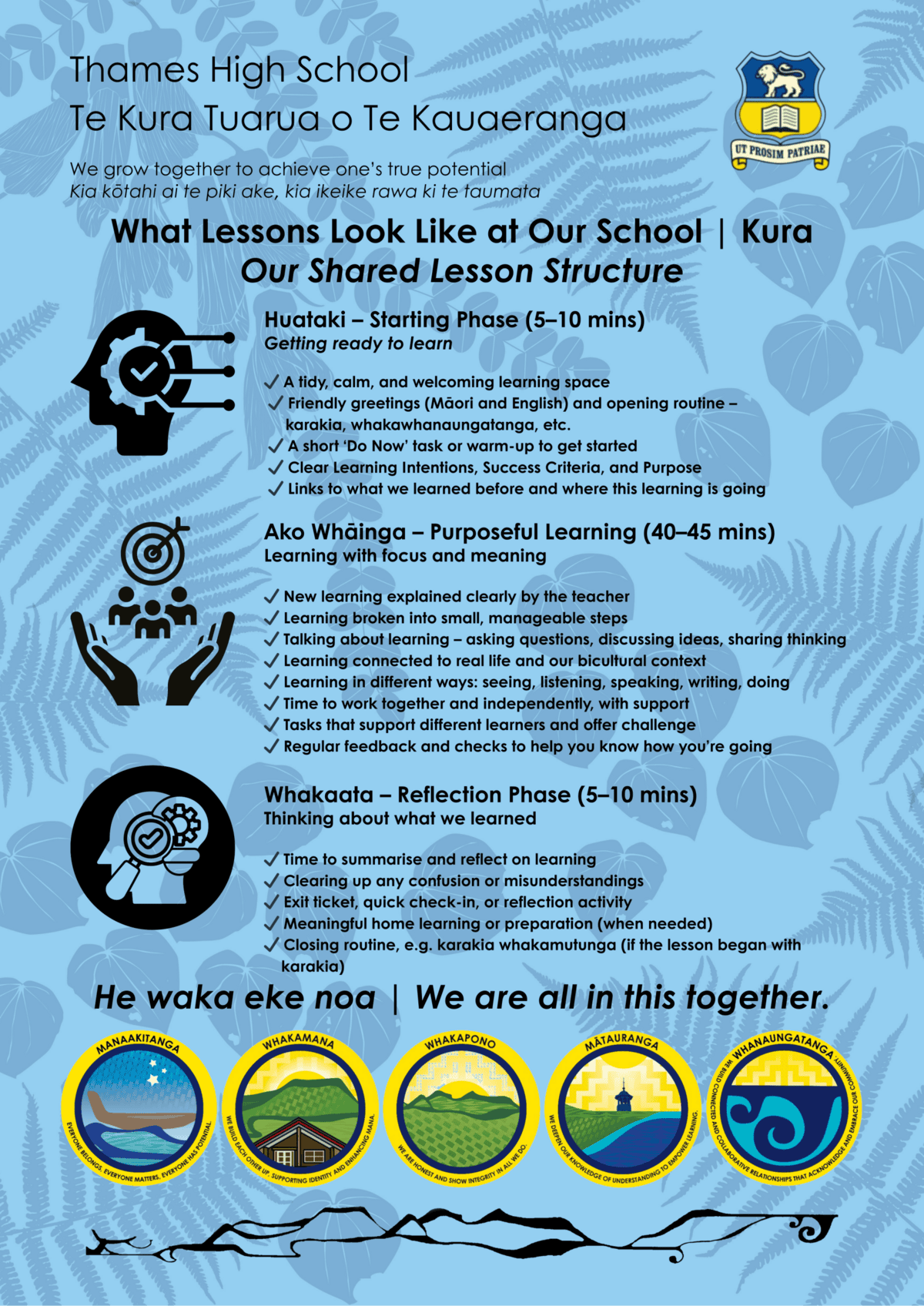
Across learning areas, lessons and learning blocks are designed to include three shared phases:
Huataki – Getting Ready to Learn
A clear, welcoming start that helps students settle, connect, and understand the purpose of learning.
Ako Whāinga – Purposeful Learning
Focused learning time where new ideas and skills are taught clearly, learning is broken into steps, and students have opportunities to practise, ask questions, and work together.
Whakaata – Reflection and Review
Time to revisit learning, check understanding, reflect on progress, and clarify next steps.
These shared expectations are made visible through student-facing posters displayed in classrooms.
What Students Can Expect from Teachers
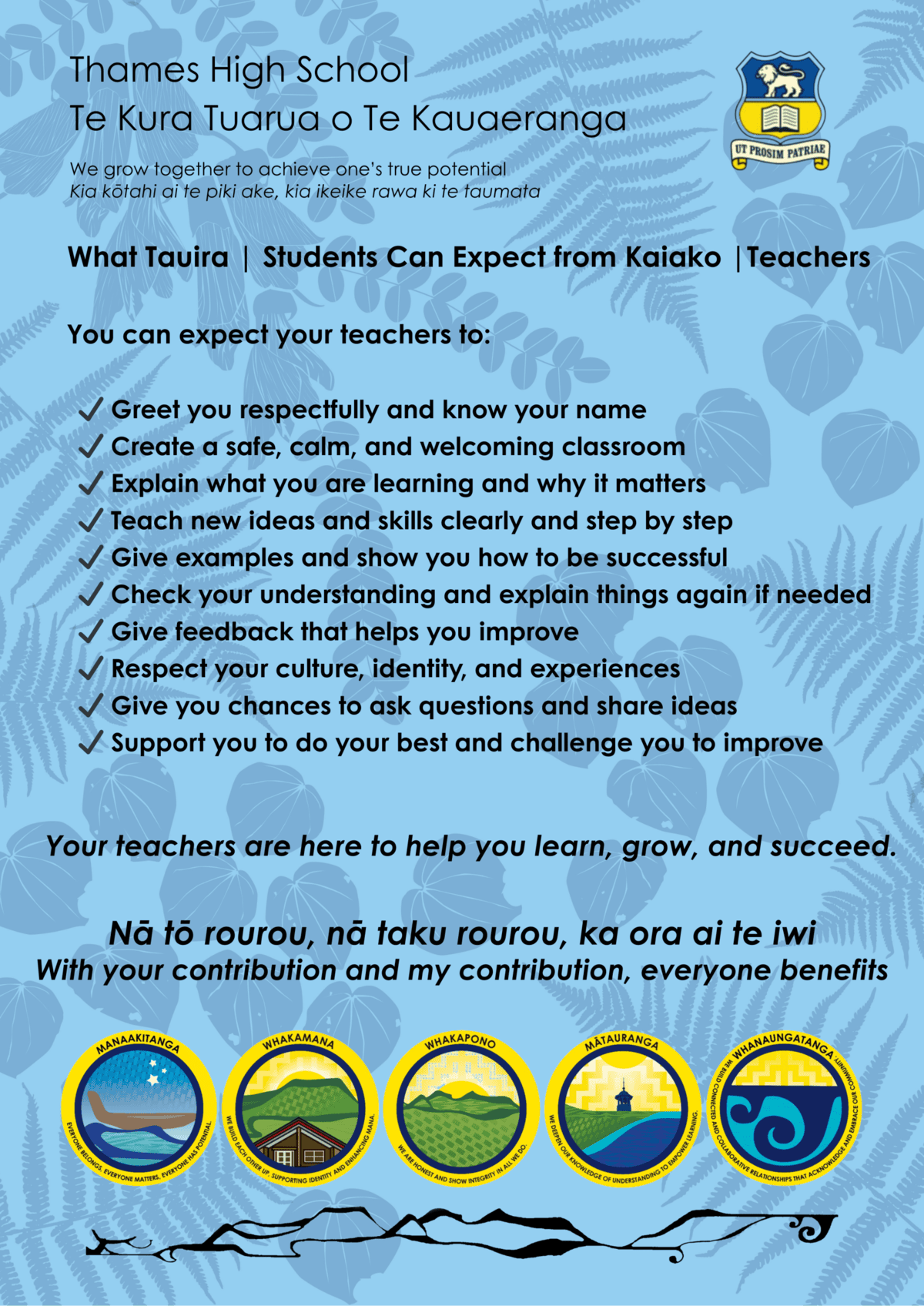
At Thames High School, students can expect learning environments where:
- They are greeted respectfully and feel known and valued
- Learning goals and success criteria are clear
- New learning is explained step by step, with examples
- Feedback helps them understand how to improve
- Their culture, identity and experiences are respected
- Effort, curiosity and perseverance are encouraged
What Teachers Expect from Students
Effective learning is a shared responsibility. Teachers expect students to:
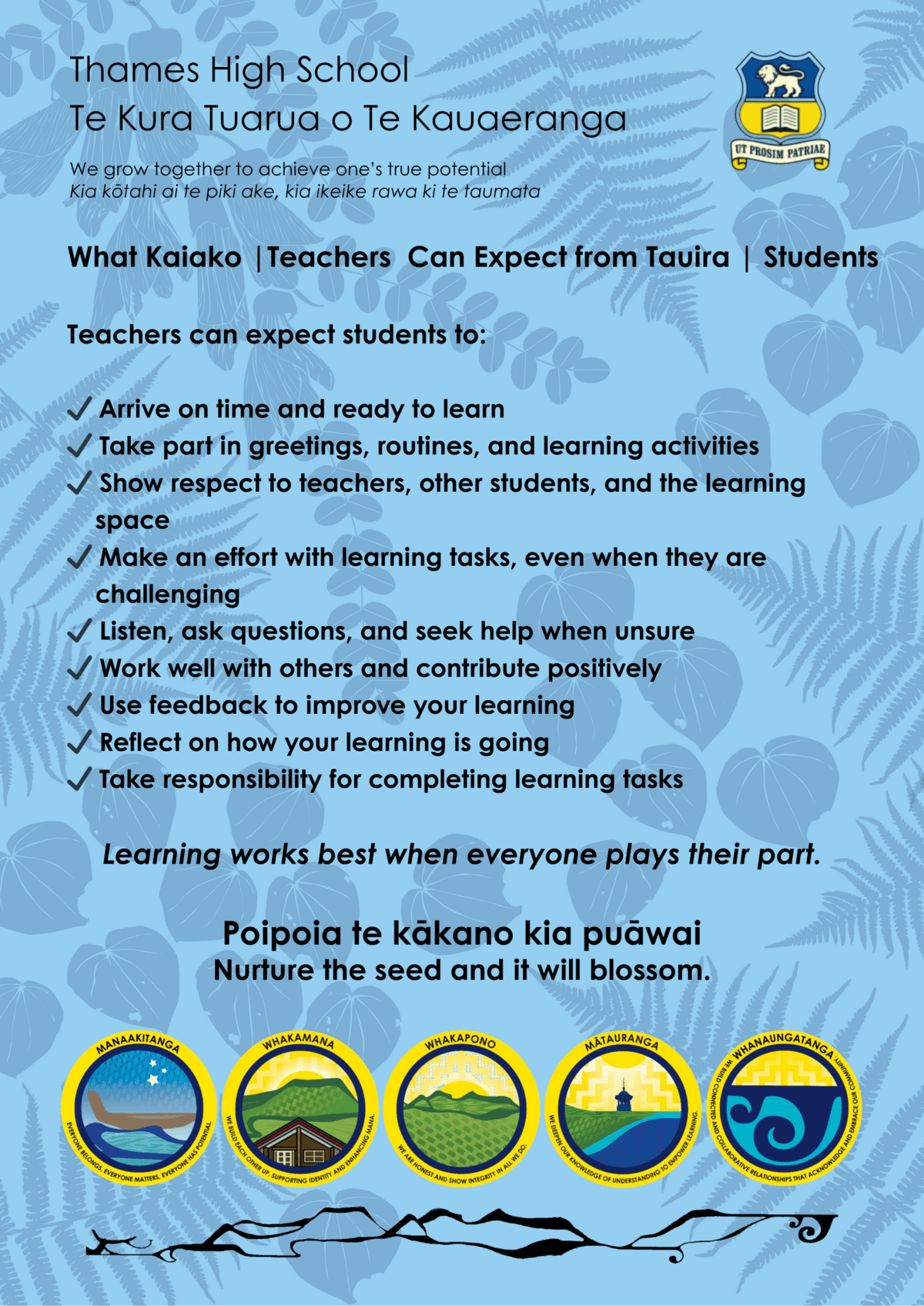
- Arrive ready to learn and take part in learning activities
- Show respect for others and the learning environment
- Make an effort, even when learning is challenging
- Ask questions and seek help when needed
- Use feedback to improve and reflect on their learning
When everyone plays their part, learning works best.
Learning, Teaching and Our Graduate Profile
Our approach to learning and teaching supports the development of the Graduate Profile. Through everyday classroom experiences, students build the knowledge, skills, dispositions and values they need to be confident, connected and future-ready.
This includes developing:
- Strong thinking and communication skills
- A sense of identity, belonging and wellbeing
- Cultural understanding and respect for others
- Responsibility, resilience and adaptability
Homework Expectations | Ngā Tūmanako Mahi Kāinga
Homework and home learning support student progress by reinforcing learning, building effective study habits, and developing independence over time. The focus is on purposeful learning, not on the amount of work set.
What We Expect
We expect students to:
- Complete homework or home learning tasks as set by their teachers
- Manage their time and meet deadlines
- Seek help or clarification when needed
Quality Over Quantity
Homework is set with purpose. Meaningful, well-designed tasks that support learning are valued over large volumes of work. Teachers are mindful of workload and aim to set homework that is achievable, relevant and beneficial.
Year-Level Guidance
- Years 9–10:
Homework is generally focused on consolidating learning, practising skills, and developing good organisational habits. As a guide, students can expect around 10–15 minutes per subject, recognising that students typically have up to five subjects per day. Tasks are designed to be manageable and to support confidence and routine. - Senior students (Years 11–13):
Homework expectations increase as students work towards assessments, credits and qualifications. This includes independent study, revision, assessment preparation and completion of coursework. As a guide, students can expect around 20–30 minutes per subject, with workload varying depending on assessment timelines and learning needs
Important
Homework time will vary from day to day and by subject. Teachers aim to set purposeful tasks and to balance workload across the week.
Graduate Profile Connections
Developing effective homework and study habits supports key aspects of our Graduate Profile, including:
- Taking responsibility for learning
- Developing self-management and organisation
- Building perseverance and resilience
- Preparing for future pathways, further study or work
We value the support of parents and caregivers in encouraging positive learning habits at home and in helping students develop independence and responsibility for their learning.
A Living Approach to Learning and Teaching
Our approach to learning and teaching continues to evolve. It is informed by evidence, reflection and feedback from students, staff and whānau, and by our ongoing commitment to improvement.
Above all, it reflects our belief that learning is a shared journey, and that when strong relationships, clear expectations and purposeful teaching come together, students thrive.
At Thames High School, learning and teaching are about growing capability, confidence and connection — together.